

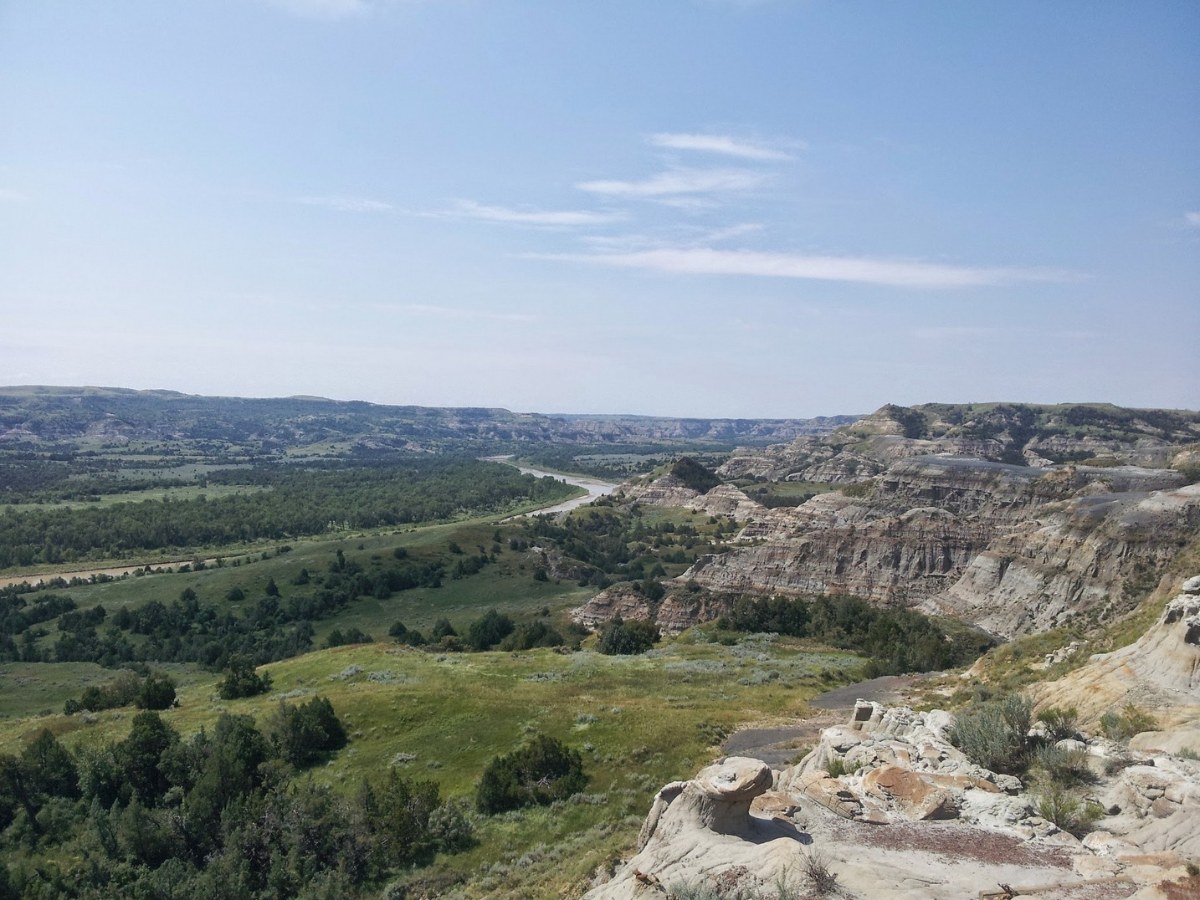
The bar smelled like spilled rye and wet wool. A wood stove pushed heat into the corners of Nolan’s Hotel, Mingusville, Dakota Territory. Outside, November pressed down hard on the plains. Inside, a man had just hung up his rifle and taken a seat at a table.
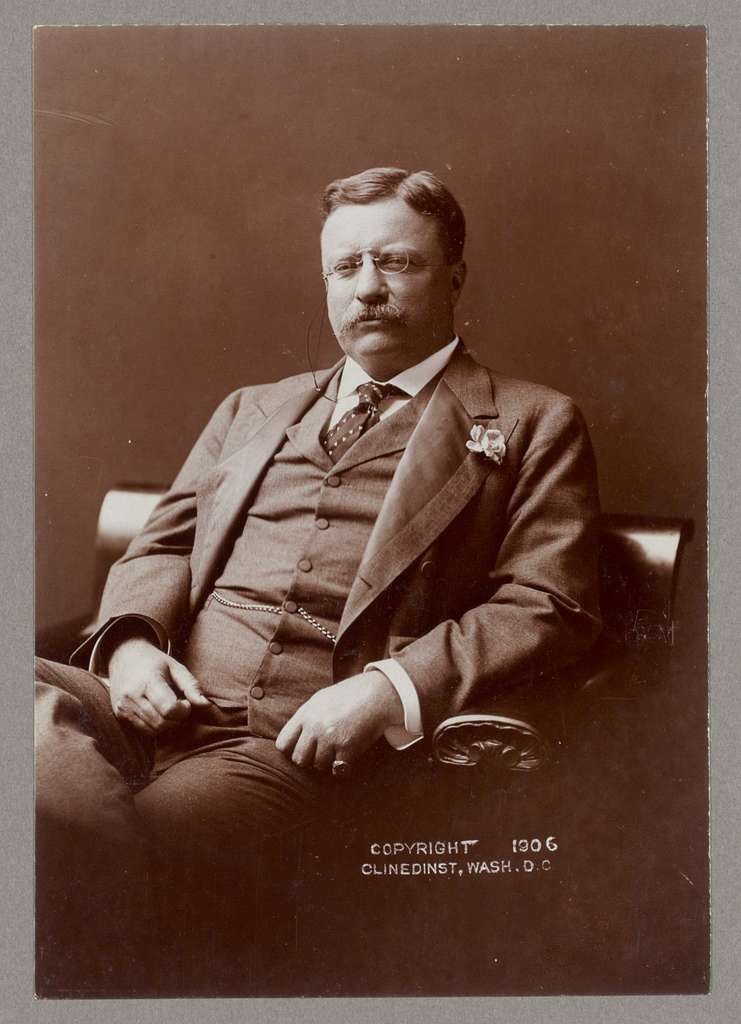
He was 26 years old. He wore spectacles. He had recently buried his wife and his mother on the same February day, and he had come west to outrun that fact. Nobody in the bar knew any of this. Nobody would have cared.
What somebody noticed instead was the glasses.
The date was November 8, 1884. The man doing the noticing was Horace Armstrong, a sheepherder known locally as “the Badger.” He was large, drunk, and already holding two revolvers when the young man with spectacles walked through the door.
Armstrong was the specific, physical, present-tense problem. Not frontier lawlessness as a concept. Not the violence of the age as metaphor. Armstrong. In the room. Right now.
He pointed his attention at the newcomer and announced it to the whole bar: “Four eyes is going to treat!”
The room understood what this meant. Armstrong was armed and intoxicated and louder than everyone else combined. He wanted the man with glasses to buy drinks for the house. He wanted to establish, publicly, who was in charge of this particular room on this particular night.
Roosevelt later wrote that Armstrong was attempting “to terrorize the other people who were in the barroom.” That was the accurate read. And for a moment, it was working.
Armstrong carried two large revolvers. Here is the detail nobody leads with: only one was uncocked. Roosevelt noted it specifically in his autobiography. One revolver uncocked, one in some other ready state. The distinction mattered. A man waving an uncocked gun is still dangerous. He is also, in a very precise mechanical sense, one step removed from instant lethality. Roosevelt was the kind of man who counted those steps.
The conventional version of this story skips straight to the knockout. That is wrong, and the wrongness matters.
Roosevelt did not rush Armstrong. He bought time with words. His response to the public demand was calm, almost agreeable: “Well, if I’ve got to, I’ve got to. Let’s see what you’re drinking.”
Feigned compliance. Armstrong, hearing what sounded like capitulation, shifted his attention toward the bar. He stepped closer. He dropped his guard by exactly the margin Roosevelt needed.
What happened next took about two seconds.
Roosevelt landed a right-hand punch to the point of Armstrong’s jaw. Before Armstrong could process the first blow, Roosevelt hit him again in the face. Then once more, in the body. Three punches total. Not a lucky swing. A sequence, fast and deliberate, delivered by a man who had been training in boxing since his student days at Harvard.
Armstrong’s legs quit. He stumbled. He fell. As he hit the floor, both revolvers discharged. The bullets went into the wood floor and into the ceiling of Nolan’s Hotel. Two holes that would eventually rot and disappear with the rest of the building, unfired at anything alive.
The fight, if it could be called that, was over.
Except Roosevelt did not walk away.
He pinned Armstrong to the floor by his throat and held him there for several minutes. Not out of anger. Out of calculation. He waited until the man was thoroughly incapacitated, until the situation was resolved past any doubt.
Then he stood up and handed both revolvers to Joe Nolan, the hotel owner standing behind the bar. Roosevelt’s instruction was precise: do not return the guns until Armstrong is sober and gone.
Then he went and boarded a steamer heading upriver to continue his ranch business.
The incident never appeared with Armstrong’s name in Roosevelt’s own autobiography. Just “a man.” A type. A frontier anecdote. Edmund Morris, in his 1979 biography “The Rise of Theodore Roosevelt,” was among the researchers who named him: Horace Armstrong, called the Badger, sheepherder, Mingusville, Dakota Territory. A specific human being who chose the wrong target on a cold November night and spent part of that night on his back on a barroom floor.
Roosevelt was in the Badlands because the other version of his life had collapsed. He had gone to Albany as an assemblyman with a future people talked about. Then, on February 14, 1884, his wife Alice died of kidney failure, and his mother died of typhoid fever in the same house, eleven hours apart. He wrote a single large X in his diary that day and almost nothing else. He came west and bought cattle and tried to become someone who could survive without the life he had planned.
What he found, in part, was that he already had what the frontier required. Not toughness as philosophy. Toughness as reflex. The willingness to close distance when every instinct argued for retreat.
He was 26 years old, standing in a bar at the edge of nowhere, and a drunk man with loaded guns called him a name and told him to buy the drinks.
Roosevelt’s response was already inside him before Armstrong finished the sentence.
Trail Notes
Mingusville no longer exists under that name. The settlement is now Wibaux, Montana, sitting just across the state line from North Dakota. Nolan’s Hotel is long gone. The Maltese Cross Ranch cabin, where Roosevelt lived during his Dakota years, was relocated to the grounds of Theodore Roosevelt National Park near Medora, North Dakota. It is open to visitors.
The ceiling of the original barroom has no historic marker. The two bullet holes grew over with time, or rotted through, or burned, or simply disappeared the way most physical evidence of most moments does.
The man who stood up from that floor had seventeen years, four months, and sixteen days left before a bullet of a different kind, fired by Leon Czolgosz in Buffalo, New York, put William McKinley in a hospital bed and made Theodore Roosevelt the 26th President of the United States.
Armstrong picked the wrong man. He also picked the right one.
—
Sources
- Roosevelt, Theodore. “An Autobiography.” Charles Scribner’s Sons, 1913. Chapter IV: “In Dakota.” Available via Project Gutenberg: https://www.gutenberg.org/files/2717/2717-h/2717-h.htm#chap04. Archived: https://web.archive.org/web/20231003183533/https://www.gutenberg.org/files/2717/2717-h/2717-h.htm#chap04
- Roosevelt, Theodore. Letter to Anna Roosevelt Cowles, November 16, 1884. Theodore Roosevelt Collection, Houghton Library, Harvard University. No public digital URL. Cited in Morris and Brands biographies.
- Morris, Edmund. “The Rise of Theodore Roosevelt.” Coward, McCann and Geoghegan, 1979. Pages 291 to 293.
- Brands, H.W. “T.R.: The Last Romantic.” Basic Books, 1997. Page 165.
A note on The Outpost: This publication reconstructs historical events from verified archival, institutional, and primary sources where available. Atmospheric and scenic details are drawn from period records where available and from historical context where noted. Specific temperatures, weather conditions, and scene-setting details included for narrative purposes are grounded in documented historical context but should not be read as verbatim archival record. All named individuals, dates, and documented events are sourced in the reference list above. The Outpost is narrative journalism, not academic history. But it holds itself to the facts that matter.
Go deeper
The Pulitzer-winning biography’s Badlands chapters cover the young Roosevelt who walked into that saloon.
* Some links below are affiliate links, meaning Ride Hike Roam may earn a commission at no extra cost to you.
- The Rise of Theodore Roosevelt by Edmund Morris. The Pulitzer-winning biography’s Badlands chapters cover the young Roosevelt who walked into that saloon.
← Previous: The River That Ate Men Whole | Next: The Lake That Paid →