

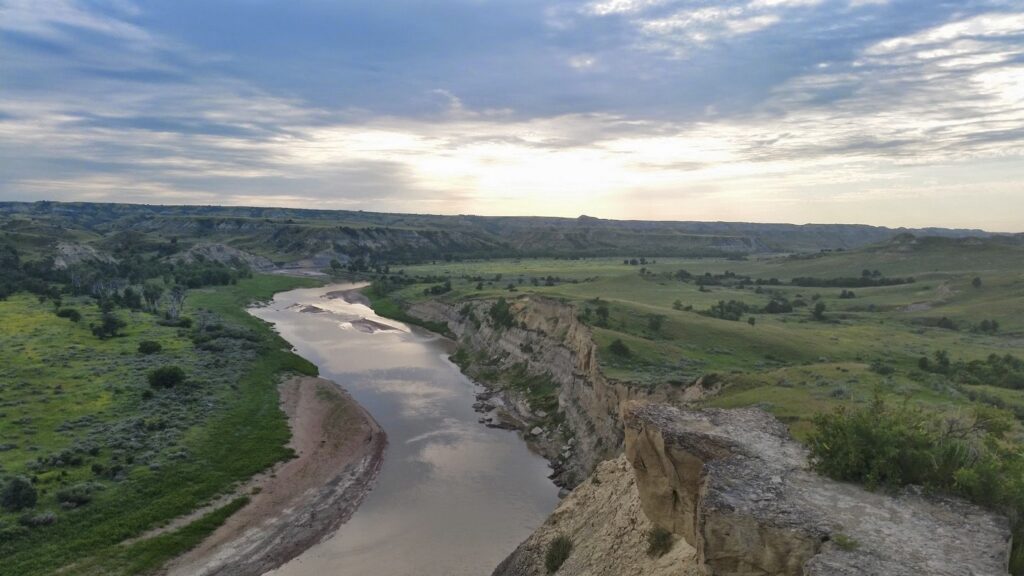
The Little Missouri in March 1886 did not look like a river. It looked like a wound.
Snowmelt and broken ice came screaming down from the Badlands uplands, carrying cottonwood trunks the size of telephone poles and grinding ice cakes that could punch through a hull before a man finished his curse. The temperature dropped below zero at night. The banks were clay shelves that collapsed without warning into black water. Nobody traveled this river in March. Nobody sane, anyway.
Three men did. They launched before first light on approximately March 13, 1886, into that brown chaos, and they were chasing something they had almost no hope of catching.
It started with an insult. On March 10, 1886, while Theodore Roosevelt was away from his Elkhorn Ranch, thirty-five miles north of Medora in the Dakota Territory, three men crept down to the riverbank and stole his twenty-foot clinker-built rowboat. They also took a canvas tarp, a buffalo robe, a kettle, an axe, flour, and provisions. The thieves were George Riley, described in Roosevelt’s own words as a notorious figure in the Badlands; Mike Finnegan, an Irishman with a reputation as a horse thief and rustler; and a man called Piker, a German whose full name appears inconsistently even in primary accounts. All three were transient, hardened, and armed.
Bill Sewall, 44, Roosevelt’s foreman, and Wilmot Dow, 20, his ranch hand, both from Mattawamkeag, Maine, returned to the Elkhorn to find the boat gone. They rode thirty-five miles to Roosevelt’s Maltese Cross Ranch to deliver the news.
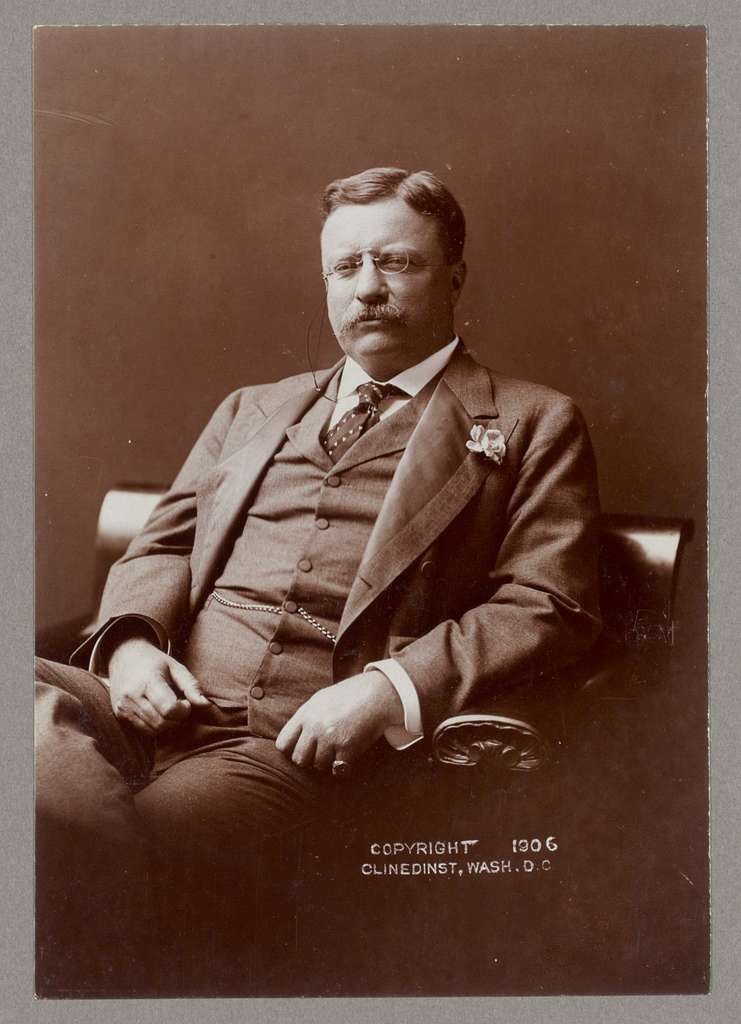
Roosevelt was 27 years old. He had been a New York State Assemblyman. He wore spectacles. He was not the obvious candidate for what came next.
His response, recorded in his own hand: “Well, we’ll follow them.”
The problem was the boat. Without it, they had no way down the river. So they built one. Roosevelt, Sewall, and Dow spent approximately a full day felling cottonwood trees and shaping them with axes. What they produced was not a boat in any elegant sense. It was a flat-bottomed scow sealed with pine gum and tallow, pinned together with green cottonwood pegs, its planks warped before they hit the water. Green cottonwood is one of the heaviest, most unstable building materials a man can choose for a vessel. They chose it because it was there.
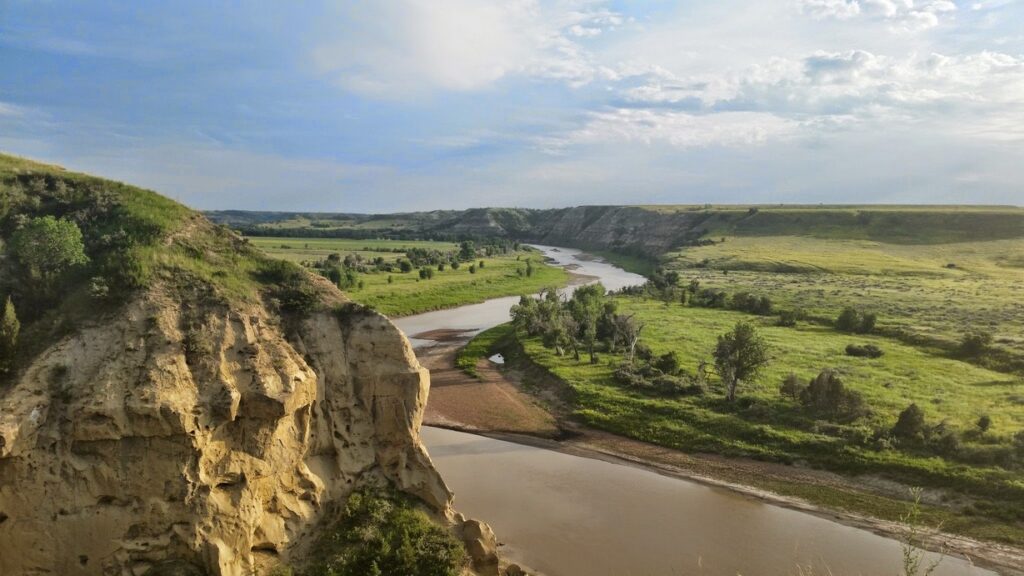
They launched this thing into the ice-choked Little Missouri on approximately March 13. The current was powerful and unpredictable. Ice cakes of “often large size,” as Roosevelt described them, came without warning. The water was freezing. The nights dropped below zero Fahrenheit. The banks offered no passage, no shelter, no help.
The stolen rowboat had a three-day head start on a river that was trying to kill all of them.
For three days, they did not stop. They worked the river in shifts, fighting the current, dodging ice, dragging their heavy scow through shallows. Roosevelt recorded the experience without theatrical complaint, which somehow makes it worse to read. The cold was not background weather. It was an active adversary, soaking gloves, seizing fingers, making every grip on a pole or oar a conscious act of will.
Approximately 150 miles downstream, near the Montana border, they found what they were looking for. The thieves’ camp, visible from the water. Three men who had considered themselves uncatchable.
The ambush happened at dawn. Roosevelt and his two ranch hands moved carefully. The thieves were armed and desperate and cornered. The capture of Riley, Finnegan, and Piker was executed without anyone dying, which on a frozen river in the Dakota Badlands in March 1886 qualifies as a minor miracle.
The stolen boat was recovered. The provisions were recovered. The hard part was over.
Except it was not.
Capturing three armed outlaws 150 miles from the nearest lawman was one problem. Getting them back was a different one entirely. A blizzard arrived. Temperatures stayed brutal. Roosevelt and Sewall and Dow had to guard three desperate men around the clock in open country with no adequate shelter and dwindling food. If they relaxed for a moment, the math was simple and ugly. Three prisoners. Three guards. The prisoners knew the country.
Here is the detail that stops people cold.
As the prisoners slept, Roosevelt laid his Winchester Model 1876 repeating rifle across their legs, positioned so any movement would wake him instantly. Then he sat a few feet away and read a paper-bound copy of Leo Tolstoy’s “Anna Karenina.”
The man guarding convicted thieves (ok, not convicted yet… the prisoners) in a blizzard in the Dakota Badlands, below-zero air, Winchester across their legs, reading a paper-bound copy of Anna Karenina. That image exists in his own writing. He put it there himself, apparently without considering it unusual.
Eventually the river became unworkable, choked with sandbars. They abandoned the scow and marched the prisoners overland through the Badlands to the settlement of Mingusville (Wibaux, MT). Roosevelt transported them by train to Dickinson and turned them over to Sheriff Merrifield. He testified against them. Riley and Finnegan received short prison sentences.
The frontier justice system, such as it was, offered what it could. Short terms for horse theft and boat theft were not uncommon. The men who had made him build a cottonwood scow and float 150 miles through ice and blizzard and below-zero nights served, in the end, modest time.
Roosevelt wrote up the entire episode himself. He included the Tolstoy detail without apparent self-consciousness, as though reading Russian literature over armed prisoners in a Dakota blizzard was simply what one did.
Trail Note
The Elkhorn Ranch site sits in the Little Missouri National Grassland, outside Medora, North Dakota. The Theodore Roosevelt National Park preserves portions of the Badlands terrain Roosevelt ranched and rode. The Little Missouri River runs through the park’s North Unit. No portion of the original 1886 scow survives. The river does not look forgiving in March. It never did.
Sources
- Roosevelt, Theodore. “Hunting Trips of a Ranchman.” G.P. Putnam’s Sons, 1886. Archive.org: https://archive.org/details/huntingtripsofra00roos
- Morris, Edmund. “The Rise of Theodore Roosevelt.” Coward, McCann and Geoghegan, 1979. Pages 306-308.
- Brands, H.W. “T.R.: The Last Romantic.” Basic Books, 1997. Pages 159-162.
- McCullough, David. “Mornings on Horseback.” Simon and Schuster, 1981. Pages 288, 304.
- Bismarck Daily Tribune. “Captured by Roosevelt.” April 1, 1886, p. 4. Chronicling America: https://chroniclingamerica.loc.gov/lccn/sn83001878/1886-04-01/ed-1/seq-4/
A note on The Outpost: This publication reconstructs historical events from verified archival, institutional, and primary sources where available. Atmospheric and scenic details are drawn from period records where available and from historical context where noted. Specific temperatures, weather conditions, and scene-setting details included for narrative purposes are grounded in documented historical context but should not be read as verbatim archival record. All named individuals, dates, and documented events are sourced in the reference list above. The Outpost is narrative journalism, not academic history. But it holds itself to the facts that matter.
Go deeper
The classic account of Roosevelt’s Badlands years — the exact time and place of the 1886 boat chase.
* Some links below are affiliate links, meaning Ride Hike Roam may earn a commission at no extra cost to you.
- Theodore Roosevelt in the Badlands by Hermann Hagedorn. The classic account of Roosevelt’s Badlands years — the exact time and place of the 1886 boat chase.
← Previous: $50 and a Very Long Way Down | Next: Four Eyes Is Going to Treat →