RIDE HIKE ROAM
HIKING · BIKING · TRAVEL, PLANNED ON PURPOSE
A blog for the more than average traveler, hiker, and mountain biker.
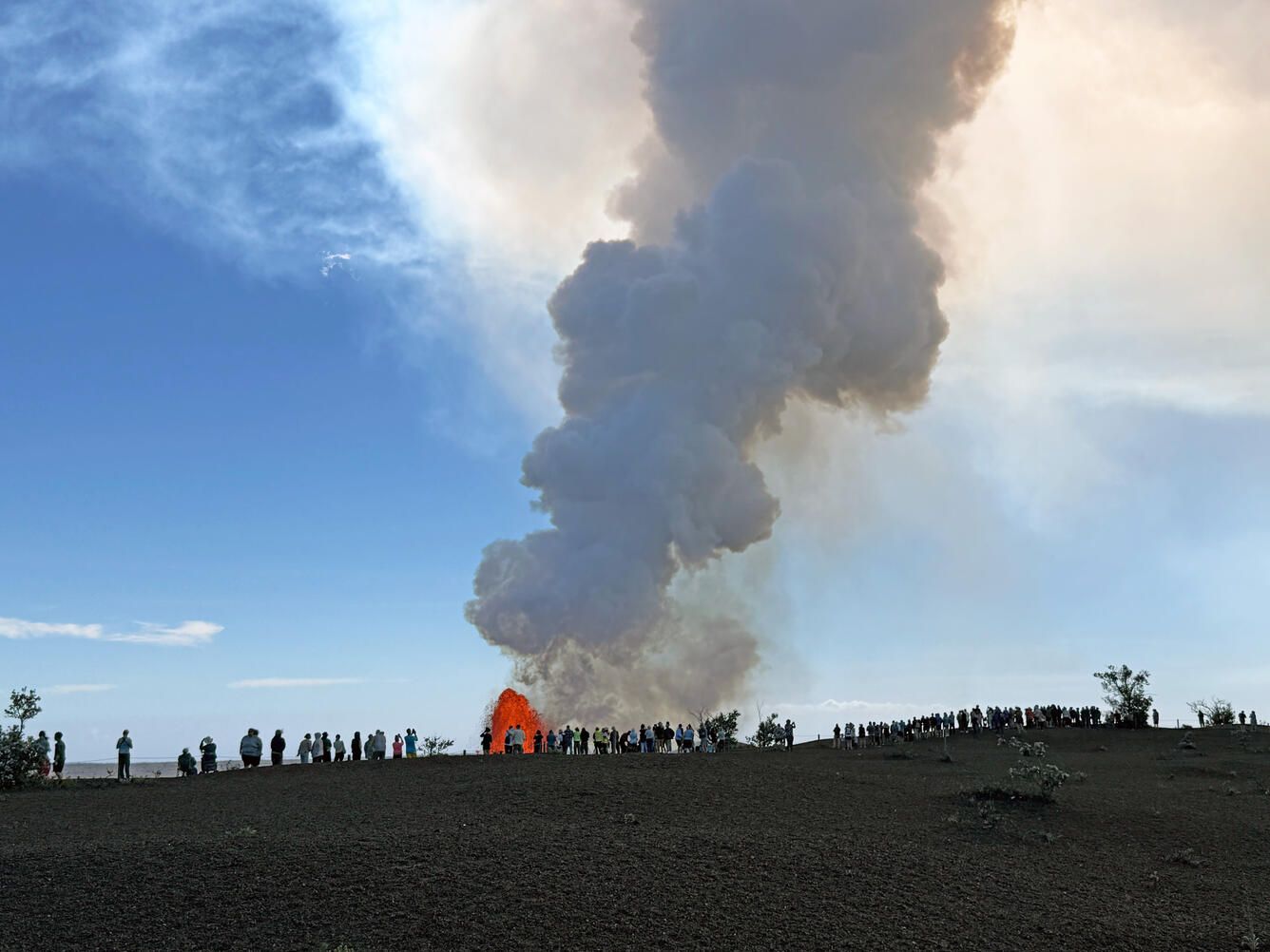
Kilauea is about to erupt again, and the window opens Wednesday. The U.S. Geological Survey says the next lava-fountaining episode at the summit is forecast for November 18 to 21, after Episode 56 threw 660-foot fountains on November 5. The park is open around the clock, the entry fee covers a full week, and no permit is needed to watch. So the trip is simple to plan. The hard part is the timing, because the lava runs on its own schedule inside that four-day window, and the window itself has already moved three times.
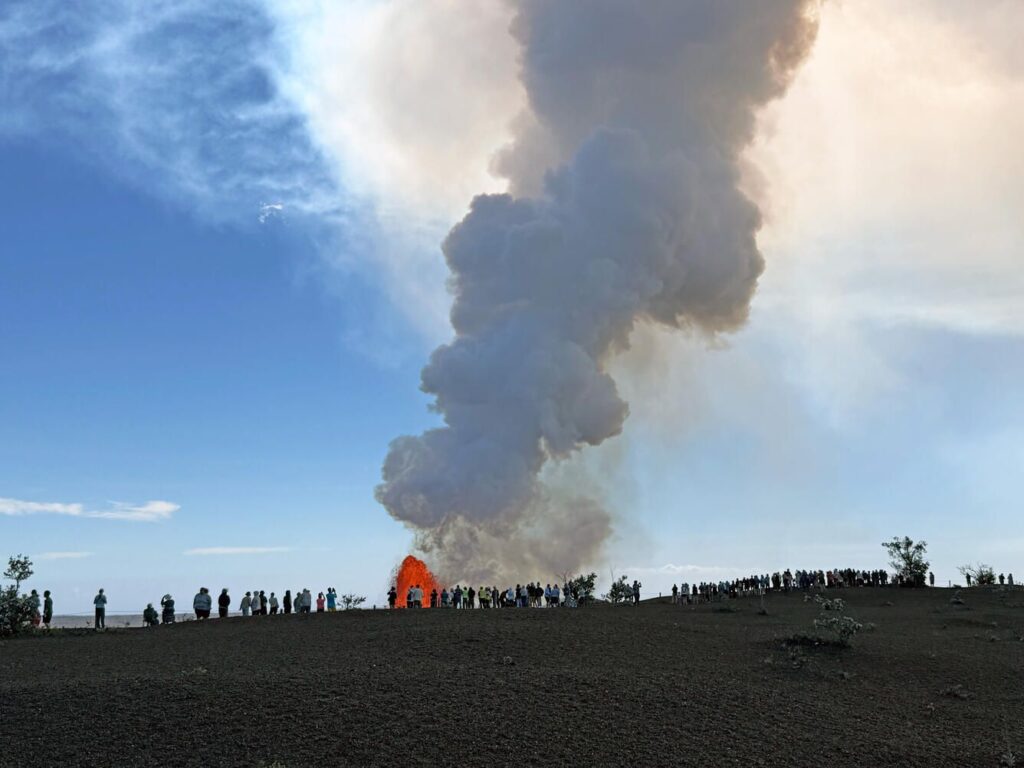
Episode 56 ran from 12:10 p.m. to 6:01 p.m. Hawaii time on November 5, just under six hours of fountaining from the north vent inside Halema’uma’u crater. The fountains reached about 660 feet, the eruption put out roughly 8 million cubic yards of lava, and the gas plume rose to about 18,000 feet above sea level. A crowd gathered at Uekahuna overlook to watch it, the photo above. The next day USGS lowered the alert level to Advisory, aviation code Yellow, where it still sits. The summit has been reinflating since, which is what the forecast is built on.
This eruption has run in episodes since December 23, 2024, with 56 fountaining episodes so far. Each one lasts hours, generally under twelve, separated by pauses of two weeks or more. The lava stays inside Halema’uma’u crater. You watch it from the rim overlooks. You do not walk to it.
USGS forecasts each episode from ground deformation, how fast the summit refills after the last one. The window for Episode 57 started at November 16 to 21, then moved to November 17 to 22, then to November 18 to 22, then to November 18 to 21 in the November 16 update, each time because the summit refilled a little more slowly than first projected. That is the honest frame for the whole piece. A forecast window is not a schedule. It can move again, and the November 16 update moved it to November 18 to 21, so check the USGS daily update the morning you go. The alert level and the latest window are on the USGS Kilauea updates page, and the park’s own alerts page carries the closures.
The summit is worth a full day with or without lava, and the day plan is the same either way. Start on Crater Rim Drive, which rings the caldera past five public overlooks: Uekahuna, Kilauea Overlook, Wahinekapu (Steaming Bluff), Kupina’i Pali (Waldron Ledge), and Keanakako’i. From the Kilauea Iki overlook, the Kilauea Iki Trail drops through rainforest onto a crater floor that held a lava lake in 1959, a loop of about four miles that takes two to three hours, with steam vents along the way. Nearby, the Thurston Lava Tube, called Nahuku, is a 0.4-mile walk through a 600-foot tunnel under fern forest, about fifteen minutes.
In the afternoon, drive Chain of Craters Road, about nineteen miles one way down through old flows and pit craters to the coast, dropping about 3,700 feet along the way. There are no services on the road, so carry water and fuel up. One change from the guidebooks: the Holei Sea Arch at the end of the road collapsed into the Pacific in September 2026, so do not build the drive around it. The coast at the end of the road is still worth the drive, for the lava fields meeting the ocean.
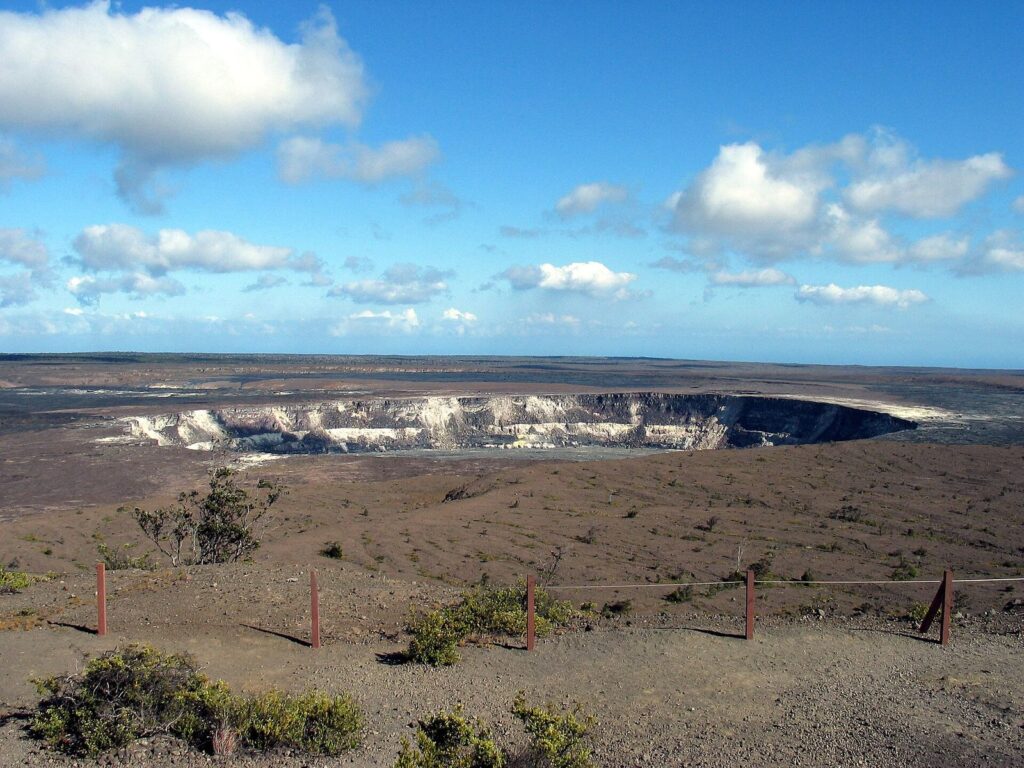
Come back to the rim after dark. That is when the fountains, if they are going, show best, and the whole caldera glows even when they are not. Uekahuna is the high ground with the widest view, and Kilauea Overlook is the closest rim view of the crater. Dusk is the best window: the sky still holds some blue while the fountains read orange against it. The hour before dawn is the quietest time at the rim, and the glow is still vivid then. Sunset is the most crowded.
Bring a headlamp and warm layers. The rim sits at about 4,000 feet, and it cools off fast after dark. Expect crowds and ranger-directed traffic when fountains are high, with full lots at peak hours. The park is open 24 hours, so there is no rush to leave, and no timed entry to fight.
Entry is $30 per vehicle, good for seven days, cards only. No reservation, no timed entry, no permit needed for eruption viewing. The Kilauea Visitor Center is closed for a full renovation, with reopening announced for late 2026, and a temporary welcome center operates at Kilauea Military Camp in the meantime. Sulfur dioxide emissions are elevated during the eruption, so anyone with breathing trouble should check conditions before a long stay at the rim. Stay on marked trails and respect the closures. The rim around Halema’uma’u has been closed to the public since early 2008, and there is no ocean entry. The lava is inside a closed area, and the overlooks are where you watch it from.
Three things to get straight before booking a flight. First, the window has moved three times already, and it can move again. November 18 to 21 is the forecast as of the November 16 update, not a promise. Second, episodes last hours. Episode 56 ran five hours and fifty-one minutes. If you fly in for one night, you can miss it entirely, and between episodes there is no visible lava. Third, the trip stands without the lava. The summit loop, the Kilauea Iki crater floor, the lava tube, and Chain of Craters Road are a full day on their own, and the $30 pass covers seven days, so the smart play is to give yourself more than one evening at the rim rather than betting the trip on a single night.
A volcano day is a long day outdoors at altitude, with sun, heat on the crater floor, and an early start if you want the rim to yourself.
* Some links below are affiliate links, meaning Ride Hike Roam may earn a commission at no extra cost to you.
If you have a Hawaii trip this week, build the day around the summit and keep the evening open. Check the USGS daily update each morning, because the window has moved three times and it can move again. Do not book a flight for one night to chase the fountains. The $30 pass covers seven days, so give yourself more than one evening at the rim, and let the day plan carry the trip if the lava does not show. Uekahuna at dusk is the spot. A headlamp and a warm layer are the two things people forget.
Sources: USGS Hawaiian Volcano Observatory: Kilauea Volcano Updates (daily update, November 16, 2026, forecast window November 18-21); USGS: November 5, 2026, Episode 56 of the ongoing Kilauea summit eruption (episode times, Uekahuna crowd, L. DeSmither photo); USGS: Kilauea Eruption Information (episodic eruption since December 23, 2024); National Park Service: Hawai’i Volcanoes National Park fees, eruption viewing, and construction closures (park open 24 hours, $30 per vehicle for seven days, visitor center renovation).