

It was January 4, 1917. Washington was cold. The streets were gray and quiet in the way that precedes something breaking.
Inside the National Parks Educational Conference, Stephen Tyng Mather was unraveling in front of everyone.
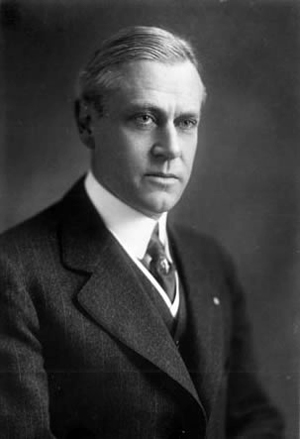
The 49-year-old man who would become the founding director of the National Park Service made extravagant promises nobody had authorized. His behavior was erratic. His composure, the thing people counted on, was gone. The men in that room watched the architect of America’s park system come apart in real time, and they understood immediately that the problem was not just personal. It was institutional. The National Park Service existed on paper and had not yet received its first operating appropriation. The man expected to lead it was headed for treatment. And the wolves were already at the gate.
What happened next has never been the headline. It should have been.
A 27-Year-Old, a Stack of Letters, and a Name That Wasn’t His
Horace Marden Albright was 27 years old. He was Mather’s assistant. In the aftermath of the January 4 episode, a small circle closed around Mather. Franklin K. Lane, the Secretary of the Interior and Mather’s direct superior. William Kent, a former congressman and one of Mather’s closest friends – the same man who had bankrolled much of Mather’s early park work. Together with Albright, they made a decision. They would present Mather’s absence publicly as illness and exhaustion. They would not disclose the full severity of his condition.
Mather was “ill.” Mather was “exhausted.” The director was resting and would return.
By April 1917, Lane had appointed Albright assistant director. Albright immediately became acting director. He attended meetings as the agency’s representative. He handled the new bureau’s day-to-day executive work and represented it in dealings with Congress and other officials. For nearly two years, Albright was the National Park Service in all but name, operating while Mather remained in treatment and largely out of commission.
In practice, this became a sustained effort to shield Mather’s condition and preserve confidence in the new agency.
And pressure was arriving fast.
On April 6, 1917, the United States entered World War I. Backed by Montana senator Thomas J. Walsh, a proposal moved through Washington to permit sheep grazing in Glacier National Park as a wartime measure.
The lobbyists had numbers on their side. The government had just mobilized 4.5 million soldiers and calculated that every one of them would need a new wool coat approximately every 79 days. Wool uniforms. Wool blankets. Wool everything. The Western Front ran on it and the supply chain was stretched to breaking. There were millions of acres of federal grassland sitting empty while boys in France shivered.
The argument was wrapped in patriotism. That made it harder to fight.
Albright pushed back anyway. From behind Mather’s desk, with Mather’s title nowhere on his door, the 27-year-old acting director held the line. He represented the agency in dealings with Congress. He made the case that parkland was not rangeland. He did it without the credibility of a confirmed director, without a decade of institutional weight behind him, and without anyone outside that small circle knowing who was actually making the argument.
The wartime proposal to allow sheep grazing in Glacier did not take effect. The park was not opened to the proposed grazing use.
The Detail That Changes the Entire Picture
Here is the thing nobody leads with.
Weeks before Mather’s breakdown at the January 4 conference, during a public rally in December 1916, he had given away $15,000 of William Kent’s money. He did not ask. He did not discuss it. Later accounts describe Mather as living with what was then called manic depression, now generally termed bipolar disorder. At that rally, he publicly pledged his wealthy friend’s funds to help launch the Save-the-Redwoods League, to Kent’s surprise. Kent ultimately honored the commitment. Fifteen thousand dollars in 1916. Roughly $400,000 to $500,000 in 2026 consumer-price terms.
Kent covered it. And then, when Mather collapsed at the conference weeks later, Kent worked alongside Lane and Albright to protect him.
The man whose money Mather had given away without permission became one of the architects of the arrangement that saved Mather’s reputation and, by extension, the reputation of the institution Mather had built.
That is not a footnote. That is the story.
What the Official Version Still Won’t Say Plainly
The standard account of the National Park Service’s founding does not lie outright. It simply arranges the truth until the gap disappears.
It presents Stephen Mather as the singular heroic director, 1917 to 1929. It notes that he had health difficulties. It moves on. The implication is continuity, steady hands, unbroken vision.
What it omits: from early 1917 to early 1919, Mather was in treatment and largely absent. The agency he founded was run by a man serving as acting director, holding the line on decisions that would shape the park system for a century.
Albright, serving in that role, helped defend the young agency’s conservation position against the Glacier grazing proposal. What disclosure of Mather’s condition would have meant for that fight, nobody can say for certain. What is certain is that Albright fought it. The wartime proposal to allow sheep grazing in Glacier did not take effect. The park was not opened to the proposed grazing use.
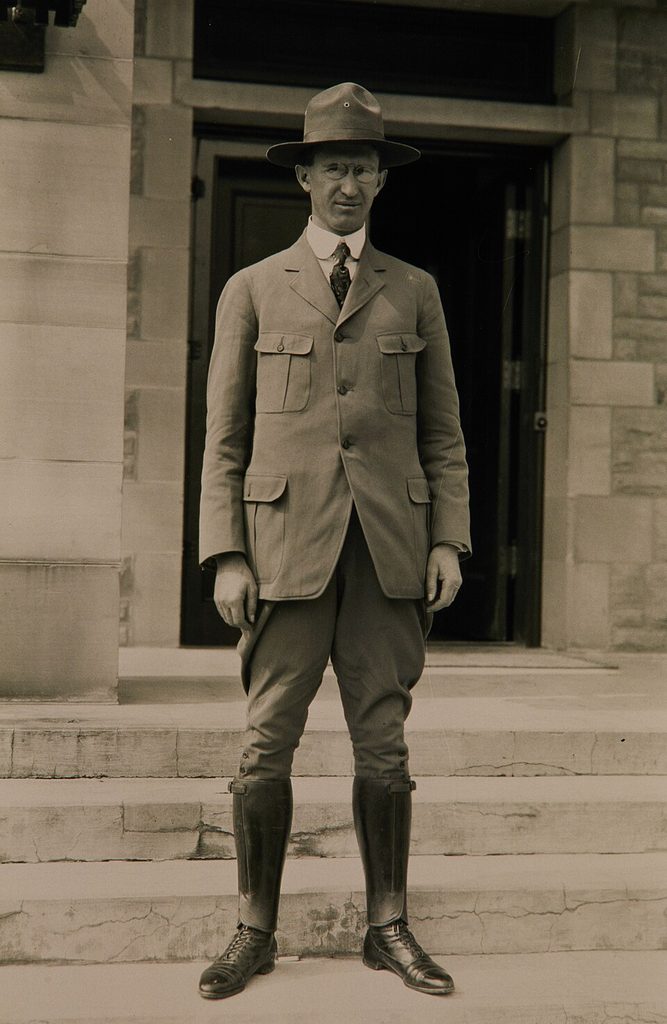
Albright went on to become the second director of the National Park Service when Mather resigned in 1929. The decade between was not idle. When Mather returned in 1919, Albright became the first NPS superintendent of Yellowstone National Park — a position he held for ten years. He built the interpretive ranger program there. He established design and building standards that defined what a national park should look like. The visitors center at Mammoth Hot Springs still bears his name. His formal record is well-documented. His two years as the secret acting director during the agency’s most fragile period are less so.
The sources exist. Donald C. Swain’s scholarly biography of Albright addresses those years in detail. Albright’s own memoir, co-written with Robert Cahn, describes the immediate aftermath and the effort made by Lane, Kent, and Albright to protect Mather while he recovered. Nobody has told it that way. Not for a general audience. Not plainly.
The reason matters. The National Park Service in 1917 was not a robust federal agency with institutional momentum. It was new. It was fragile. It had exactly one famous name attached to it. When that name went into treatment, everything the agency represented could have gone with it.
None of that happened. The proposal stalled. The parks held. Mather came back in 1919 and served another decade. He became a legend.
Albright made all of that possible by doing something that does not fit cleanly into the heroic founding narrative. He stepped in, held the line, and maintained an arrangement that preserved an institution. And then he stepped back and let the legend have its name.
If You Go
Glacier National Park in northwestern Montana is open year-round. The meadows Walsh wanted opened to grazing in 1917 are still there. The proposal never took effect.
Look at the grass.
Sources
Albright, Horace M., and Cahn, Robert W. The Birth of the National Park Service: The Anecdotal History from the Records of Horace M. Albright. Howe Brothers, 1985.
Kelly, John F. “The Triumph of Manic Mather.” Psychology Today, March 21, 2018. https://www.psychologytoday.com/us/blog/the-guest-room/201803/the-triumph-manic-mather
“Guide to the Papers Related to Stephen T. Mather.” National Park Service. https://www.nps.gov/articles/000/guide-to-the-papers-related-to-stephen-t-mather.htm
Horace M. Albright Oral History. Boone and Crockett Club Oral History Collection. University of Montana. https://scholarworks.umt.edu/cgi/viewcontent.cgi?filename=0&article=1030&context=booneandcrockett_oralhistory&type=additional
“Mather and Albright: The First Two Directors.” National Park Service Historical Brochure, 2012. https://npshistory.com/publications/whsa/brochures/mather-albright-2012.pdf
Smith, Daniel L. “The Near Grazing of Glacier.” Distinctly Montana Magazine, Spring 2017. https://distinctlymontana.com/near-grazing-glacier
Swain, Donald C. Albright: The Making of a Park Service Director. University Press of Colorado, 2000.
“CPI Inflation Calculator.” U.S. Bureau of Labor Statistics. https://www.bls.gov/data/inflation_calculator.htm
A note on The Outpost: This publication reconstructs historical events from verified primary sources. Atmospheric and scenic details are drawn from period records where available and from historical context where noted. Specific temperatures, weather conditions, and scene-setting details included for narrative purposes are grounded in documented historical context but should not be read as verbatim archival record. All named individuals, dates, and documented events are sourced in the reference list above. The Outpost is narrative journalism, not academic history – but it holds itself to the facts that matter.
Go deeper
The founding story told by the man who was there — Albright’s own account of the years this article covers.
* Some links below are affiliate links, meaning Ride Hike Roam may earn a commission at no extra cost to you.
- Creating the National Park Service: The Missing Years by Horace M. Albright. The founding story told by the man who was there — Albright’s own account of the years this article covers.
← Previous: The Yak Ranch That Became a Race | Next: $50 and a Very Long Way Down →